
Last Updated on June 26, 2026 by Digiinte.com Team
Most websites lose search traffic not because their content is bad but because they have no idea what their competitors are doing. The pages sitting above you on Google did not get there by luck. They found the right keywords, built the right links, and covered topics you missed. The good news is you can reverse-engineer all of that. Competitor analysis tools for SEO make it possible to see exactly what is working for your rivals and use that data to outrank them.
- Key Takeaways
- What Is SEO Competitor Analysis
- Why SEO Competitor Research Matters
- The 5 Best Competitor Analysis Tools for SEO Research
- Quick Comparison: Which Tool Is Right for You
- How to Run a Basic Competitor Keyword Analysis
- Common Mistakes to Avoid
- Expert Tips for Getting the Most Out of These Tools
- Frequently Asked Questions
- Conclusion
This guide covers the 5 best tools for SEO competitor research in 2025, what each one does best, who it is for, and how to get started without wasting hours on features you do not need.
Key Takeaways
- Competitor analysis reveals keyword gaps, backlink opportunities, and content ideas your rivals are already using successfully.
- Semrush is the best all-in-one option, while Ahrefs leads for backlink research.
- SpyFu is the top pick for PPC and paid keyword intelligence at an affordable price.
- Moz Pro is the most beginner-friendly tool for keyword research and domain authority tracking.
- Ubersuggest offers a solid free tier that works well for smaller websites and bloggers.
- You do not need all five tools. Picking one or two that match your goals is enough to start seeing results.
What Is SEO Competitor Analysis
SEO competitor analysis is the process of studying the websites that rank above you in search results to understand their keyword strategy, backlink sources, content structure, and traffic patterns. The goal is not to copy them. It is to find where they are strong, where they are weak, and where you can step in with better content or a smarter approach.
Why SEO Competitor Research Matters
Keyword research alone tells you what people are searching for. Competitor analysis tells you what is actually working in your niche right now. Those are two very different things.
When you skip competitor research, you end up guessing at topics, targeting keywords that are too competitive, and missing the low-hanging content opportunities that your rivals are already ranking for. Industry data consistently shows that the majority of web pages get zero organic traffic, largely because they are targeting keywords without understanding the competitive landscape first.
A proper competitor keyword analysis helps you find keyword gaps, meaning searches your competitors rank for but you do not. These gaps are often the fastest path to new traffic because the demand is already proven.
The 5 Best Competitor Analysis Tools for SEO Research
1. Semrush: The Best All-in-One SEO Competitor Tool
Semrush is the most comprehensive option on this list. It covers keyword research, competitor tracking, backlink analysis, technical audits, content marketing, and PPC research all in one platform. The database behind it is massive, with over 25 billion keywords and 808 million domains tracked across 142 geographic regions.
For competitor research specifically, the Organic Research tool lets you type in any domain and immediately see which keywords it ranks for, how much traffic those keywords drive, and which pages perform best. The Keyword Gap tool is where things get really useful. You enter your domain alongside a few competitors and it highlights every keyword they rank for that you do not. That is a ready-made content calendar right there.
The Backlink Gap tool works the same way for links. It shows websites that link to your competitors but not to you, giving you a targeted list for outreach.
- Best for: SEO agencies, digital marketers, and growing businesses that need a complete toolkit.
- Pricing: Starts at around $165 per month for the Starter plan.
- Free option: Limited free searches available without an account.
2. Ahrefs: The Go-To Tool for Backlink and Content Research
If backlinks are central to your SEO strategy, Ahrefs is probably the most important tool on this list. Its backlink index is updated every 15 to 30 minutes, which makes it genuinely useful for time-sensitive link building campaigns. No other tool refreshes backlink data as frequently.
The Site Explorer feature gives you a deep look at any competitor’s organic traffic, top-performing pages, and the keywords driving that traffic. The Content Gap tool mirrors Semrush’s keyword gap feature and works well for finding topics your competitors cover that you have not touched yet.
Ahrefs also introduced a Traffic Potential metric that estimates how much overall traffic a page could earn, not just from one keyword but from all the related searches it might rank for. This is a smarter way to prioritise content than looking at individual keyword volume in isolation.

- Best for: Link building teams, content strategists, and SEO professionals who want deep backlink data.
- Pricing: Starts at $129 per month for the Lite plan.
- Free option: Ahrefs Webmaster Tools is free for your own domain.
3. SpyFu: The Best Tool for PPC and Paid Competitor Research
SpyFu was built specifically around competitor intelligence. The name says it all. You type in a competitor’s domain and it shows you every keyword they have ever ranked for organically, every Google Ad they have run, and how their strategy has shifted over time. The historical data goes back years, which is rare.
What makes SpyFu stand out is the sheer volume of keyword data it surfaces. Comparisons across major domains show that SpyFu often tracks significantly more keywords per domain than Semrush or Ahrefs, giving you a broader picture of what competitors are actually doing. For PPC research specifically, it offers 10 times more paid keyword data than many rivals.
If you are running Google Ads alongside your organic SEO, SpyFu is especially useful. The Google Ads Advisor feature suggests PPC keywords to bid on based on what your competitors are doing, saving hours of manual research.
- Best for: Marketers running both SEO and paid search campaigns.
- Pricing: Starts at $39 per month, making it one of the most affordable options.
- Free option: Limited free searches with no account required.
4. Moz Pro: The Friendliest Option for SEO Beginners
Moz Pro consistently earns high marks for ease of use. If you are just getting started with SEO and the idea of wading through Semrush’s dozens of features feels overwhelming, Moz is the right place to start. It covers keyword research, site audits, rank tracking, and backlink analysis with a clean interface that does not require a manual to navigate.
The Keyword Explorer tool gives access to over 1.25 billion keyword suggestions with clear difficulty scores and search intent signals. Moz’s Domain Authority score, which it pioneered, has become an industry standard for measuring a site’s overall ranking strength. When you are doing competitor analysis, comparing Domain Authority scores gives you a quick read on how tough the competition actually is.
Moz also has a strong community and learning platform. MozCon, its annual SEO conference, and the Moz Blog are genuine resources that help you understand not just what the data means but what to do with it.
- Best for: Beginners, small business owners, and marketers who want clean, actionable SEO data.
- Pricing: Starts at $99 per month.
- Free option: Free tools available including MozBar browser extension.
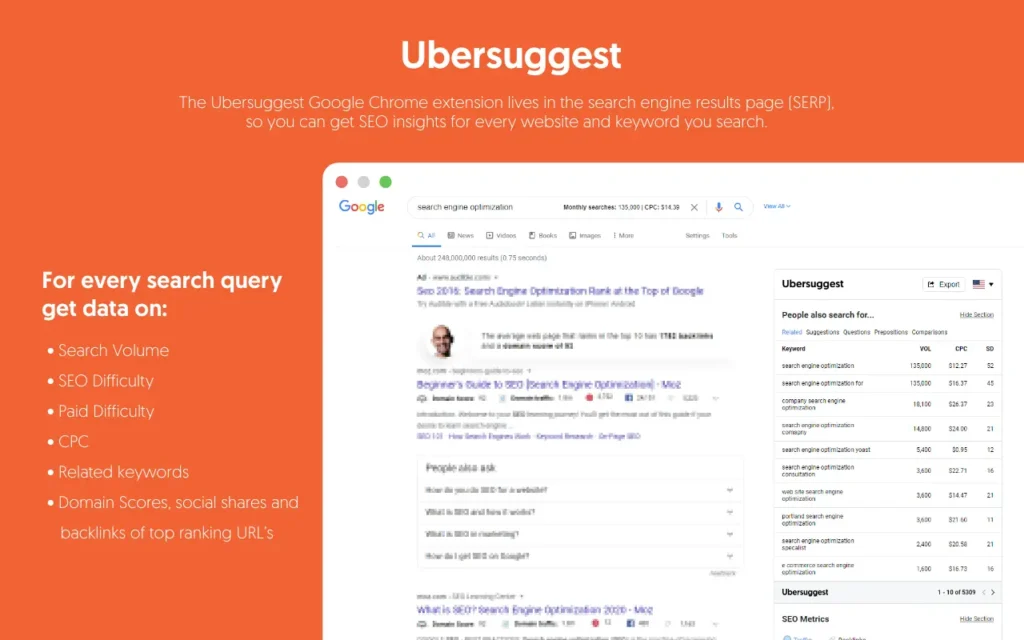
5. Ubersuggest: The Best Free Competitor Analysis Tool
Ubersuggest started as a simple keyword suggestion tool and has grown into a surprisingly capable free SEO platform. Neil Patel built it with the goal of making professional SEO data accessible to everyone, and for smaller websites and bloggers, it delivers real value without any upfront cost.
The competitor analysis section lets you enter a domain and see its top organic keywords, estimated traffic, and top pages. The Keyword Gap feature, while not as deep as Semrush or Ahrefs, still surfaces useful opportunities. For someone managing a personal blog or a small local business website, Ubersuggest covers the basics well.
The free plan does have limits on daily searches, so heavy users will eventually hit a ceiling. But the paid plans start at $29 per month, making it one of the most affordable options for solo marketers and freelancers.
- Best for: Bloggers, freelancers, and small business owners on a tight budget.
- Pricing: Free with limits. Paid plans start at $29 per month.
- Free option: Solid free tier available with daily search limits.
Quick Comparison: Which Tool Is Right for You
| Tool | Best For | Starting Price | Free Option |
| Semrush | All-in-one SEO and competitor tracking | $165 per month | Limited free searches |
| Ahrefs | Backlink research and content gaps | $129 per month | Free for own domain |
| SpyFu | PPC and paid keyword research | $39 per month | Limited free searches |
| Moz Pro | Beginners and ease of use | $99 per month | Free MozBar extension |
| Ubersuggest | Budget-friendly SEO basics | $29 per month | Free daily searches |
How to Run a Basic Competitor Keyword Analysis
You do not need all five tools at once. Here is a simple process to get started with any of the tools above.
- Pick 3 to 5 competitors who rank above you for keywords you care about.
- Enter one competitor domain into your chosen tool and look at their top organic pages.
- Note which keywords are driving the most traffic to those pages.
- Run a keyword gap analysis between your domain and each competitor.
- Filter the gap keywords for ones with low to medium difficulty that match what your site is about.
- Add those keywords to your content plan and start writing pages that target them directly.
That is the core loop. The tools make it fast. The strategy makes it work.
Common Mistakes to Avoid
- Copying competitors exactly: The goal is to find opportunities they created, not to replicate their site. Add your own angle, depth, and original perspective.
- Targeting only high-volume keywords: High volume usually means high competition. Low difficulty keywords with 500 to 2,000 monthly searches are often the smarter choice for growing sites.
- Ignoring content quality signals: If competitors rank because their content is genuinely better, matching their keyword list without matching their content depth will not move the needle.
- Running analysis once and forgetting it: Competitor strategies change. Check in every 60 to 90 days to catch new keyword opportunities and content shifts.
- Using too many tools at once: Jumping between five tools creates confusion and wasted time. Pick one or two, learn them well, and act on the data.
Expert Tips for Getting the Most Out of These Tools
- Start with keyword gaps, not keyword research: Gaps show you proven demand. Regular keyword research shows you potential demand. The former is faster to rank for.
- Look at your competitors top pages, not just their keywords: A page driving 5,000 monthly visits on one topic tells you far more than a keyword list.
- Track rank changes over time: Tools like Semrush and Ahrefs let you see when a competitor lost rankings. That is an open door for you to step through.
- Use free tools to validate before you invest: Ubersuggest and SpyFu free tiers are enough to confirm whether a paid subscription makes sense for your situation.
Frequently Asked Questions
Conclusion
The best competitor analysis tools for SEO do not just show you what your rivals are doing. They show you exactly where the gaps are and how to fill them. Whether you pick Semrush for its all-in-one depth, Ahrefs for its backlink precision, SpyFu for its PPC intelligence, Moz for its simplicity, or Ubersuggest for its accessible free tier, the most important thing is to actually act on the data.
Pick one tool that fits your budget and goals. Run a keyword gap analysis this week. Find three topics your competitors rank for that you have not covered yet. That is where your next traffic growth is hiding.
Start your competitor analysis today and let the data guide your next content move.
