
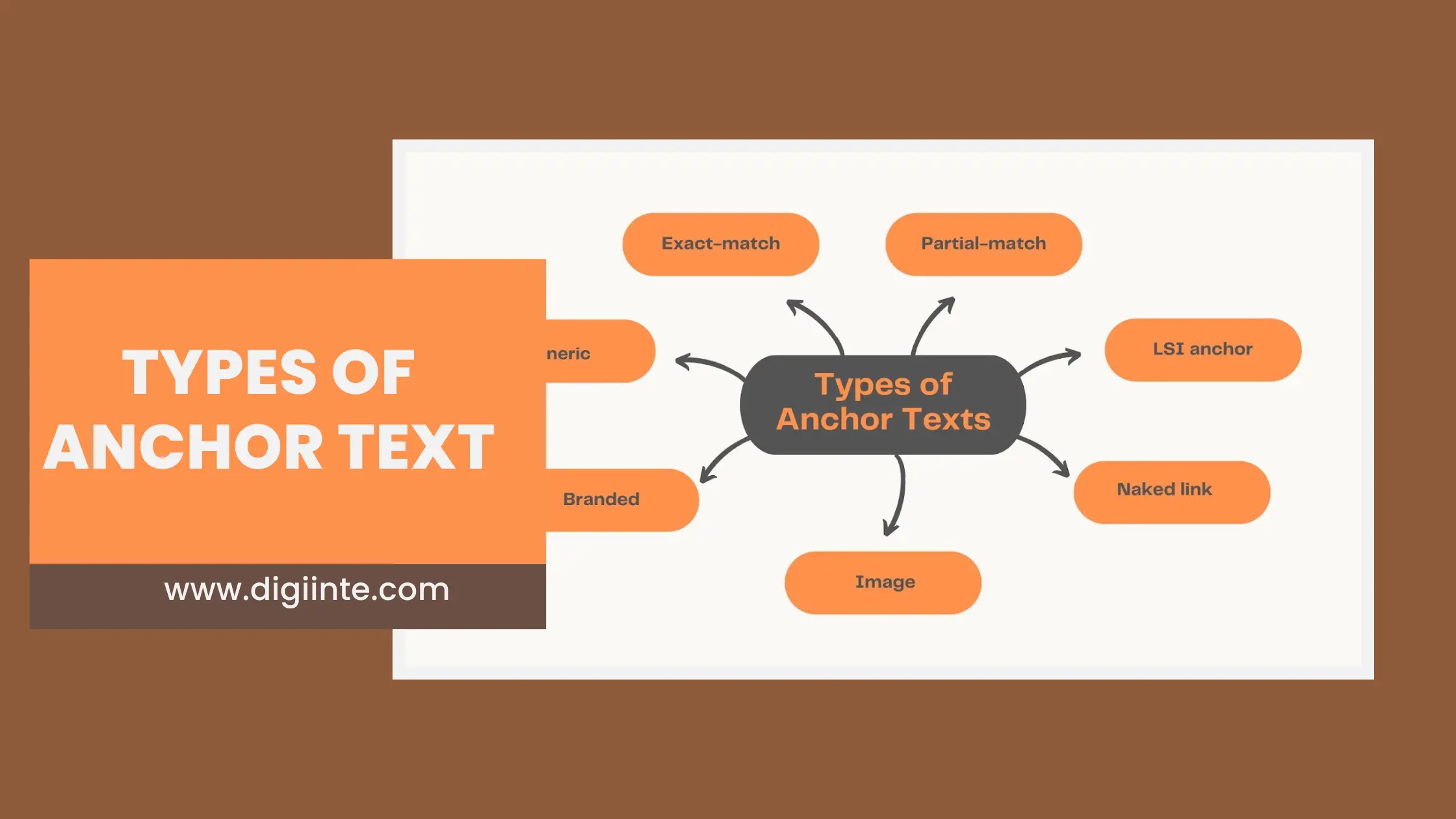
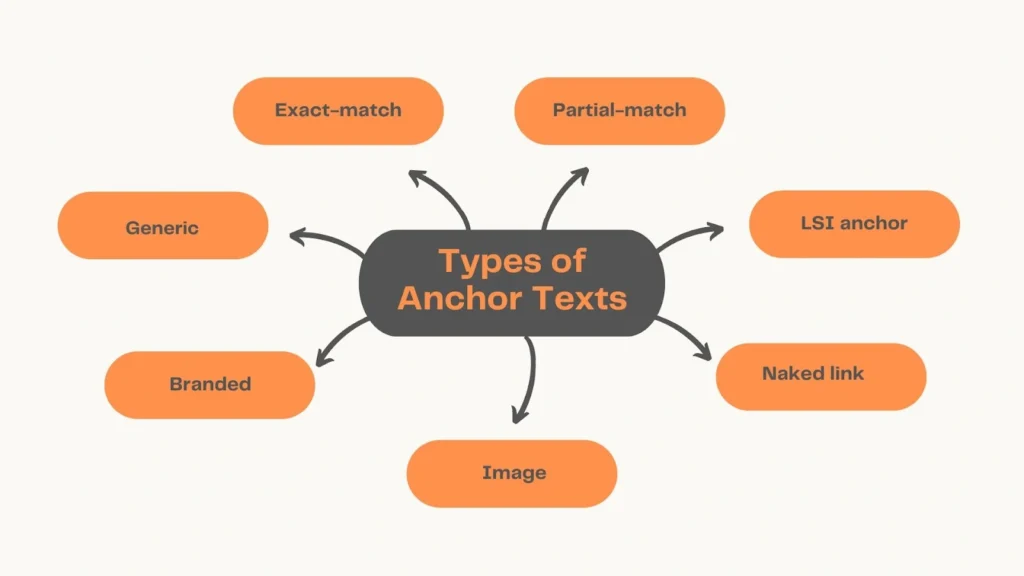
Seven anchor text types. One of them causes most Google penalties. One of them is underused by almost every site that ignores it. Here’s the honest breakdown of all seven.
Most guides just name and define the types. That’s not enough. What you need to know is when each type helps your rankings, when it becomes a liability, and how much of each belongs in your backlink profile. This post gives you all of that clearly and concisely.
Key Fact : Google’s Penguin algorithm evaluates anchor text distribution patterns across your entire backlink profile not individual links. One exact-match anchor from a trusted editorial site is fine. Thirty from guest posts using the same phrase is a penalty trigger. It’s always about the pattern, never a single link.
Summary
This post covers all seven anchor text types with a consistent format for each: what it is, real examples, when it helps your SEO, when it starts working against you, and the recommended percentage range for a safe backlink profile. 2
Why Type Distribution Matters More Than Keywords
Google evaluates anchor text at the profile level, not the link level. A single exact-match anchor from a credible editorial source is fine. Fifty exact-match anchors across guest posts using the same phrase triggers Penguin regardless of how legitimate each post looks individually. The keyword inside the anchor matters far less than the distribution of types around it.
| Same Keyword — Completely Different Outcomes Site A: 200 referring domains – 45% branded, 14% naked URL, 12% generic, 12% LSI, 10% partial match, 7% exact match. Result: healthy. Site B: 80 referring domains – 6% branded, 0% naked URL, 0% generic, 10% LSI, 15% partial, 69% exact match. Result: Penguin risk. Same keyword in both profiles. Completely different outcome. The type distribution is everything. |
Type 1: Exact Match
The double-edged sword : strongest signal, highest risk
Exact match uses your target keyword verbatim as the link text. It passes the strongest relevance signal of any anchor type and triggers Penguin fastest when overused. Keep it below 10% of referring domains and it contributes positively to rankings. Push it above 15% and you’re in penalty territory.
Example: A SaaS company gets 8 editorial links naturally using ‘project management software’ that’s fine. If they then run a guest post campaign and 50 sites all link with that exact phrase that’s a footprint.
| HELPS when: It appears naturally from editorial writers who describe exactly what they’re linking to under 10% of referring domains | HURTS when: You use it in outreach campaigns or the same phrase appears across many sites in a short window | Target %2 (ref. domains) 5-10% max |
Type 2: Partial Match
The safest keyword anchor : use this in all active outreach
Partial match includes your keyword alongside other words: ‘use this anchor text analysis tool’ or ‘a complete guide to backlink checking.’ It passes strong topical relevance without creating a detectable footprint especially if you rotate the surrounding words across different sites.
This is the go-to anchor type for any intentional link-building campaign. Vary the phrase each time ‘check your anchor text profile here,’ ‘how to analyze backlink anchor text,’ ‘run an anchor text audit with this tool’ each one signals the same topic, none creates a pattern.
| HELPS when: You rotate different surrounding words for every new link strong relevance without footprint | HURTS when: Every guest post uses the exact same partial-match phrase even varied anchors become a footprint at scale | Target % (ref. domains) 10-15% |
Type 3: Branded
Your most important anchor type build this actively
Branded anchors use your company name, site name, or a variation of it. They’re the most important type for profile health not because they pass the strongest keyword signal, but because they dominate every naturally earned, editorially legitimate link profile. When branded drops below 30%, the profile starts to look engineered regardless of how good each individual link is.
When a writer at Forbes or Inc. covers your company, they write ‘Digiinte’ not ‘best anchor text checker.’ That’s just how editorial writing works. Real journalists name brands. SEOs name keywords. Google knows the difference.
| HELPS when : It makes up 40–50% of referring domains the clearest signal of a genuinely earned profile | HURTS when : It’s below 25% your profile looks built, not earned, regardless of link quality | Target % (ref. domains) 40–50% – top priority |
3 Fast Ways to Build Branded Anchors
- Brand mention monitoring: use Google Alerts to find unlinked brand mentions , request a link. The anchor will almost always be your name.
- Business directories: Yelp, Clutch, G2, BBB all produce branded anchors with no outreach effort.
- Podcast appearances: show notes link to guests by name , pure branded anchor every time.
Type 4: Naked URL
Naked URL anchors use the raw URL as link text: ‘https://digiinte.com/anchor-text-checker.’ They pass minimal keyword signal but add critical authenticity to a profile. Forums, resource lists, and social shares all tend to produce naked URLs naturally, without any SEO intent. Their presence signals real people are sharing your content without thinking about optimization.
| HELPS when : They appear organically from users sharing links in communities, forums, and resource lists | HURTS when :They’re under 3% of your profile — too clean. Every link looks deliberately placed | Target % (ref. domains) 10-15% |
Type 5: Generic
Essential filler : absence is the red flag, not presence
Generic anchors – ‘click here,’ ‘read more,’ ‘here,’ ‘this article,’ ‘learn more’ pass almost no keyword signal. But they’re essential for profile diversity. A profile with zero generic anchors is suspicious. Real people who link spontaneously use these phrases constantly. Their absence implies every link on your site was placed by an SEO.
| HELPS when :They naturally appear alongside branded and keyword anchors – 10–15% signals real, organic linking behavior | HURTS when :They’re absent entirely – your profile looks 100% engineered | Target % (ref. domains) 10-15% |
Type 6: LSI / Semantic
LSI anchors use topically related phrases rather than exact keywords: ‘backlink profile analysis,’ ‘link text audit guide,’ ‘how to check link diversity.’ Google’s NLP understands topic relevance from semantically related phrases — so these pass strong signals with minimal Penguin risk. You can build 20 links with 20 different LSI anchors and create zero footprint.
| HELPS when : You use different semantic phrases across every site — topical authority without pattern detection | HURTS when : All your LSI anchors cluster around the same narrow phrase variations — starts resembling exact-match coordination | Target % (ref. domains) 10–15% |
Quick LSI Anchor Generator Search your target keyword on Google. Scroll to ‘Related searches’ at the bottom those phrases are your LSI anchors. Also check ‘People also ask’ for question-based anchors like ‘how to check anchor text backlinks’ that sound completely editorial
Type 7: Image Alt Text
When a hyperlinked image has no surrounding text, Google reads the image’s alt attribute as the anchor text. Every linked infographic, logo, and product screenshot passes anchor signals through its alt text — whether the SEO who built that link knew it or not. This is the most commonly overlooked anchor type in backlink audits.
If you submit an infographic to 15 directories with alt=’best anchor text checker tool 2026,’ you’ve just created 15 near-exact-match anchors that won’t show up in a standard text-anchor report unless you specifically filter for them.
| HELPS when : Linked images use brand-name or descriptive alt text that matches natural editorial writing | HURTS when :Infographics and linked assets carry keyword-stuffed alt text replicated across multiple sites | Target % (ref. domains) Natural : audit quarterly, treat like text anchors |
The Full Anchor Text Strategy Matrix
A healthy anchor text profile in 2026 combines all seven types : no category at zero, branded anchors leading, exact match below 10%. The absence of any natural anchor type is as suspicious as the excess of any keyword-rich one.
| Anchor Type | Target % (Ref. Domains) | Risk Level | Build Actively? |
| Branded | 40-50% | Low | Yes – top priority |
| Naked URL | 10-15% | Very Low | Let it happen naturally |
| Generic | 10-15% | Very Low | Let it happen naturally |
| LSI / Semantic | 10-15% | Low–Medium | Yes – great for outreach |
| Partial Match | 5-10% | Medium | Yes – rotate phrases |
| Exact Match | 5-10% | High | Accept organically only |
| Image Alt Text | Natural | Varies | Audit quarterly |
The 10-Link Campaign Template
For every 10 backlinks you build intentionally, use this breakdown: 4-5 branded, 2-3 LSI or partial match with different phrases each time, 1-2 generic or naked URL. Accept any exact-match anchors that arrive organically. Never pursue them.
| Links | Anchor Type | Example Anchor | Where to Build |
| 1-4 | Branded | ‘Digiinte’ / ‘Digiinte.com’ / ‘Digiinte SEO’ | Guest posts, PR, interviews, podcasts |
| 5-6 | LSI / Semantic | ‘backlink profile analysis’ / ‘link text audit’ | Guest posts, partner content |
| 7-8 | Partial Match | ‘anchor text tool by Digiinte’ (vary each time) | Guest posts, resource pages |
| 9-10 | Generic / Naked | ‘read more’ / ‘https://digiinte.com/page’ | Directories, forums, resource lists |
Monitor Monthly Backlinks arrive without your knowledge. Run a Google Search Console anchor check every month. If exact-match creeps above 10%, build branded and generic links in your next campaign to bring the ratio back into balance.
Related Guides in This Cluster
1. Anchor Text Checker: The Complete Guide — all benchmarks, type definitions, and the full 15-post cluster map.
2. What Is Anchor Text in SEO? — deeper individual type breakdowns with HTML examples and risk levels.
2. Best Free Backlink Anchor Text Checker Tools in 2026 : detailed breakdown of every tool you can use to run this check, with ratings, pros, cons, and free tier comparison.